

Start with what the audience should feel. Then give the music a clear job.
1. Give the music a job before choosing a track.
A useful music brief explains what the audience should feel, when that feeling should change and what the soundtrack must leave room for. “Make it cinematic” does not tell a composer or editor whether the film needs anticipation, momentum, intimacy or release. Start with the purpose of the film, then describe the contribution music should make.
For an AI brand film, this matters before every shot is finished. The music direction can help the team judge the pace of an animatic, the duration of a reveal and whether a sequence needs a pause. Waiting until the picture is locked can leave the editor trying to fit a musical phrase around decisions that were made without it.
Write one sentence that connects the music to the intended response. For example: “The music should make a steady training routine feel purposeful, building confidence without turning it into a victory montage.” That gives a creative team more to work with than a list of genres. It also establishes a useful boundary: energetic does not automatically mean triumphant.
FICTIONAL BRIEF / NOT A CLIENT PROJECT
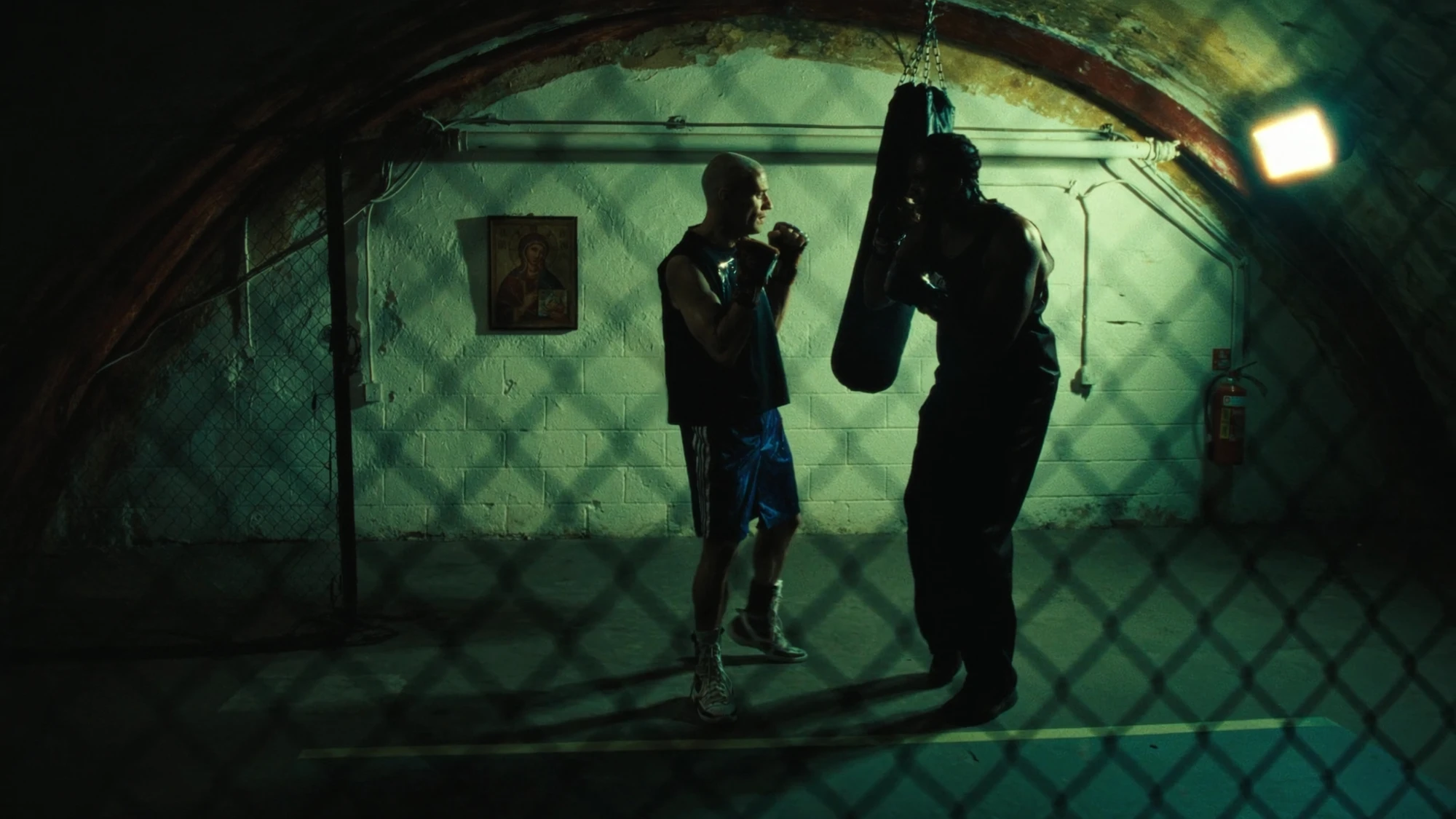
For the examples below, imagine a 20-second film for an invented training label, Paceform. The story moves from preparation to movement, then ends on a restrained brand card. A short voiceover carries the message. The music should create forward motion while keeping the words easy to follow.
This is a proposed brief, not a commissioned film, a generated track or a listening experiment. The Explore images illustrate visual pacing questions; they do not document a single campaign.
Before approaching a studio, share the script, the current storyboard or animatic, the intended duration and any existing brand sound guidelines. If those materials are still changing, say which decisions are stable. A composer can respond to an evolving edit more usefully when the non-negotiable moments are clear.
2. Annotate references instead of asking for a copy.
Two or three carefully explained references can be more useful than a large playlist. For each, identify the passage you mean and the quality you want to discuss: the sparse opening, the weight of the percussion, the gradual addition of layers or the way the ending resolves. Separate those qualities from the exact melody, recording and artist identity.
Also explain what you do not want to carry over. A reference might have the right pulse but an overly dramatic chorus. Another might have an appealing texture but a vocal that would compete with the script. Without that distinction, different reviewers can hear the same reference and imagine different films.
| Brief field | Useful note | Why it helps |
|---|---|---|
| Passage | Identify the time range in the supplied reference. | Focuses discussion on the relevant moment. |
| Keep as inspiration | A restrained pulse and gradual increase in density. | Describes a musical function. |
| Avoid | A large vocal hook or triumphant final swell. | Prevents an unwanted interpretation. |
| Relationship to picture | Movement grows before the first running shot. | Connects sound to an editorial decision. |
Do not approve a direction solely because it resembles a familiar advert. Ask whether it belongs with this film’s message and visual world. A useful reference conversation makes the reasoning transferable, so the team can evaluate an original response rather than compare every note with a temporary track.
3. Map the emotional arc to the edit.
Describe the beginning, development and ending in plain language. A short film does not need a new musical event on every cut. It needs a shape that supports the story. Some edits benefit from a continuous pulse; others need a deliberate drop in activity so a product detail or spoken line can register.
For the fictional Paceform brief, the following timings are proposed planning choices. They are not measured results or a formula for all sports films. The important step is to agree what happens at each transition before judging whether a candidate track fits.
| Time | Picture and message | Proposed musical role |
|---|---|---|
| 0–4 seconds | Preparation; the first spoken phrase establishes the idea. | Sparse opening with a clear pulse and room for speech. |
| 4–13 seconds | Movement develops across several shots. | Add energy through arrangement, without a distracting lead vocal. |
| 13–17 seconds | A quieter image supports the final spoken thought. | Reduce activity enough for the message to land. |
| 17–20 seconds | Brand card and closing line. | A deliberate ending that leaves the final words readable and audible. |
A tempo number alone cannot communicate this shape. Two pieces with the same tempo can feel very different because of their rhythm, instrumentation and density. If a specific beat needs to meet a visual action, mark that event. If the timing can move, label it flexible rather than forcing every future edit to serve an arbitrary beat.
Ask to hear the proposed direction against the animatic, not only as a standalone audio file. A track that feels compelling on its own may crowd a short message. Conversely, a restrained arrangement may make sense once the picture and voice are present. The animatic planning guide explains how to make those timing decisions reviewable before final production.

4. Leave space for voice and meaningful sound.
If the film has voiceover, supply a timing read or the current recording with the music brief. Mark the lines that carry the main promise or call to action. The team should not discover at final mix that the musical peak lands directly under the sentence the viewer must understand.
There are several possible responses to competition between music and speech. The arrangement can become simpler, a prominent instrument can enter later, the edit can give a line more room, or the music level can change. Lowering the entire track is one option, but it should not replace a discussion about what is competing for attention.
Adobe documents automatic ducking in Premiere as a way to generate level changes that lower music around dialogue or other selected audio. Its controls and generated keyframes support adjustment; they do not decide the creative balance for a particular film. Listen to the transitions and revise them where necessary. Source: Adobe’s automatic ducking documentation.
Keep music and sound design distinct in the brief. A shoe impact, a breath or a room tone may have a narrative role that should remain audible. Avoid assigning every effect the same importance. Identify the few sounds that carry meaning, then give the mixer a clear priority order for the moments where they overlap with music and voice.
Review at a comfortable, consistent playback level. If one candidate is much louder than another, ask for a comparable listening level before making the creative choice. Check the film on the devices that matter to the intended use, including a phone speaker when relevant. This is a practical review step, not a promise that one mix will sound identical on every device. For the broader relationship between effects, atmosphere and speech, see the sound-design guide.
5. Brief the short versions and ending now.
A 20-second master and a six-second cutdown ask different things of the same musical idea. The short version may have no time for an extended introduction. It still needs an intentional beginning and ending. List the required durations before selecting or commissioning music, and ask how the musical structure will adapt to each.
Decide whether the same motif should connect the versions, whether there is an existing sonic logo, and whether that logo needs a clear space at the end. Do not add a new brand sound merely because the film has an end card. If the company already has audio guidelines, provide the approved assets and explain who owns that decision.
Antfood’s published discussion of sonic branding describes work that expands a core sound into broader uses, including its account of Instacart’s audio ecosystem. That is a studio’s description of its own work, not independent proof of a performance gain. The relevant planning lesson here is narrower: ask whether this film’s music is a one-off choice or part of a continuing brand system. Source: Antfood’s sonic-branding analysis.
Language versions also need attention. A translated voiceover may occupy different parts of the timeline, so the spaces left for speech may need to change. Ask for suitable separate audio elements when those versions are in scope. The localisation guide covers the wider approval decisions.
If AI music generation is proposed, ask the supplier to identify the actual tool and output used, the available editing controls and what separate elements can really be delivered. Do not assume that a generated track comes with editable instruments or repeatable revisions. Confirm the intended distribution and usage with the supplier before committing the final edit. The brief should record confirmed answers rather than make general promises about every tool.
6. Agree what approval and delivery mean.
Separate direction approval from final mix approval. At the direction stage, assess the musical character and emotional arc against the brief. At the mix stage, assess the balance with voice and effects, the transitions and the ending. Reopening the entire genre choice during a final level review can create avoidable rework.
Name the decision-maker and collect feedback into one set of notes. Replace “it needs more energy” with an observation and desired change: “Between 4 and 9 seconds the picture accelerates, but the arrangement stays flat; introduce more rhythmic activity while keeping the voice clear.” That gives the team a specific problem to solve without dictating an instrument unnecessarily.
MUSIC BRIEF / SEND BEFORE PRODUCTION
- The film’s purpose, intended audience and current script or animatic.
- One sentence describing the music’s job.
- Annotated references, including qualities to avoid.
- Key picture events and voiceover timings.
- Required durations, language versions and ending treatment.
- Existing sonic identity assets and the person who approves them.
- Confirmed usage requirements and any unresolved supplier questions.
- The agreed review stages, revision scope and delivery list.
For delivery, distinguish the final full mix from separate voice, music and effects files. If music stems are needed, define which grouped elements are included and confirm their availability. A single stereo music file is not the same deliverable as separate percussion, bass and melodic parts. Ask that related files share an agreed start point so the editor can align them reliably.
The most useful brief does not require the brand team to become musicians. It makes the film’s priorities explicit. When the purpose, arc, voice space and versions are agreed, the composer or editor can make creative decisions that serve the whole piece. That is a stronger basis for approval than choosing a track in isolation and hoping the pictures will fit it.
Sources checked 21 October 2026. Paceform is an imaginary label and the timing plan is an illustrative brief; no commission, generated soundtrack, listening test or performance result is claimed. Adobe is cited for a documented software capability. Antfood is cited for its own published account. Explore images are independent visual references.
DELIVER WITH INTENTION
A clear direction.
A considered soundtrack.
Bring the story, the script and the feeling you want to create.
Discuss your project ↗