
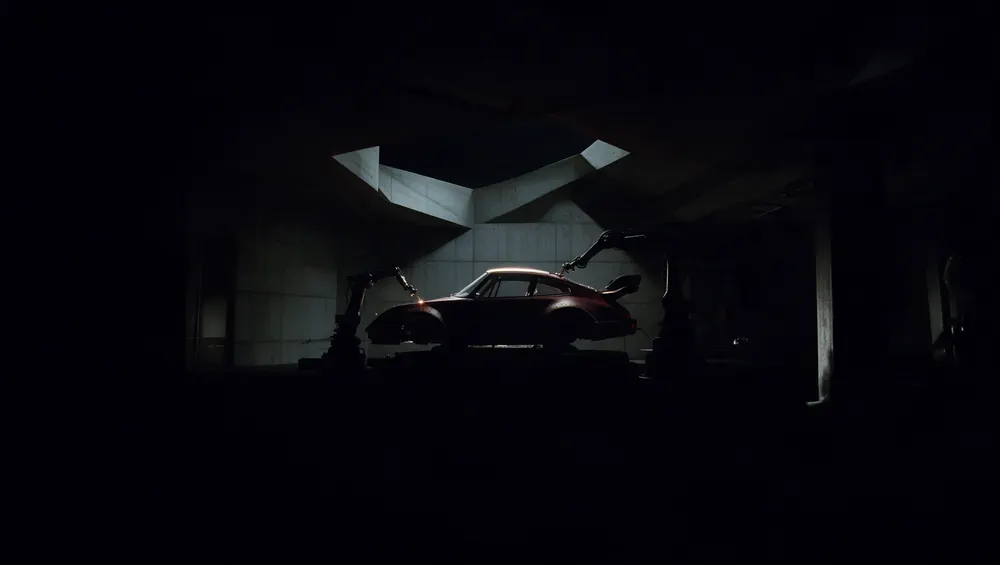
Choose a production sound by asking what each shot must prove, which details need control and how the work will be revised. A campaign can use photography, live action, generative imagery and 3D for different jobs within the same idea.
1. Give sound a job before choosing a track.
A short film can contain beautiful images and still feel disconnected. The problem may be that every cut introduces a new atmosphere, each action gets the same oversized impact, or the music tells a different story from the picture. Adding more sounds rarely resolves that disagreement. Start by deciding what the audience should notice, and when.
For this exercise, imagine a fictional, unbranded outerwear film: a person leaves a quiet interior, crosses a stairway and reaches an open rooftop. The intended feeling is a gradual release from enclosure into space. It lasts fifteen seconds, has no dialogue and ends with an on-screen message. This is a planning demonstration, not a completed Nightwolf commission, an audio test or a claim about a real product.
The Explore images below are separate archive references used to explain listening decisions. They are not consecutive shots from this imagined film. No original soundtrack or production method is inferred from them. The useful deliverable here is a cue sheet that a director, editor and sound designer could discuss before making anything.
WORKED EXAMPLE
One sentence sets the direction.
“Begin close and contained; make the transition into open air feel earned; leave the final message space to land.” This gives the team a standard for choosing or rejecting sounds.
2. Read the picture as a sound brief.
Make three passes through the planned edit. First, identify visible actions that need a credible relationship with sound: a foot meeting a step, fabric moving or a door reaching its stop. Second, identify the space around them. Third, decide which moments should feel heightened, quieter or more subjective. These are separate questions, even when one sound helps answer several of them.
In the workshop cover image, a sound treatment could emphasise a contained room, an isolated metallic detail or a deliberately still atmosphere. A loud engine would be a creative addition, not something proved by the still. Do not turn every visible object into an audible event. The absence of an expected sound can be useful when it serves an agreed idea.
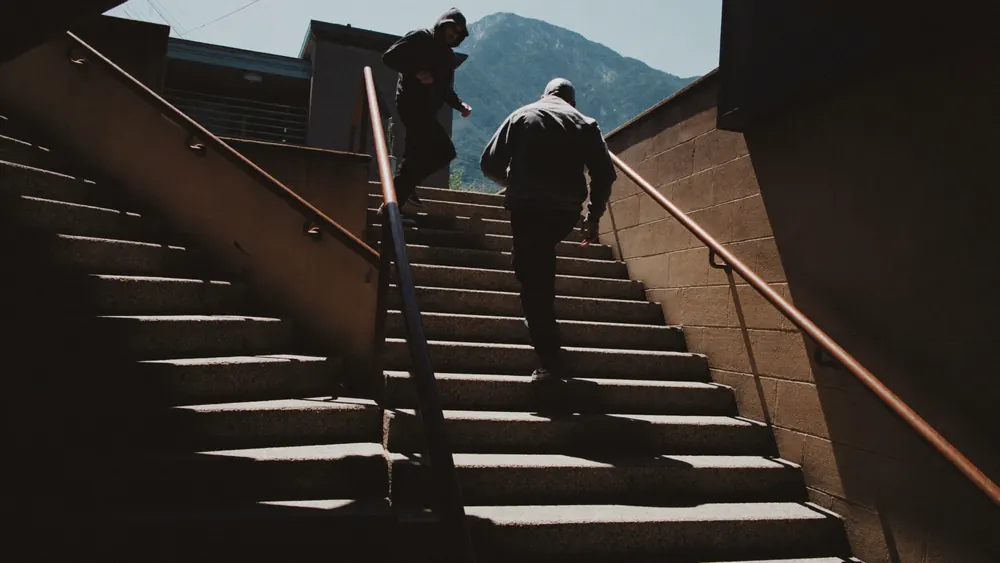
For the fictional rooftop sequence, the important change is perspective. Keep the interior close, let the stairs establish a repeated action, then open the atmosphere at the rooftop. The sound should help the viewer understand that progression without requiring an explanation in the copy.
3. Turn the idea into a timed cue sheet.
Use seconds during early planning, then align cues to the actual picture frames once the edit is available. The table below specifies intention and priority. It does not prescribe a universal mix level or claim a tested result. Every timing is illustrative and would change with performance, camera movement and edit rhythm.
| Time | Imagined picture | Sound plan | Review question |
|---|---|---|---|
| 0–3 sec | Close detail of jacket fastening indoors | Quiet interior bed; one restrained fabric or fastening detail | Does it feel close without implying an exaggerated product feature? |
| 3–7 sec | Person moves up concrete stairs | Foot contacts follow the action; a simple musical pulse enters | Are the contacts credible and the rhythm supportive? |
| 7–10 sec | Threshold opens onto a rooftop | Interior atmosphere recedes; open-air texture arrives across the transition | Can the change of space be understood without a large impact? |
| 10–12 sec | Wide pause in the open air | Reduce detail; let one musical phrase resolve | Does the pause feel intentional rather than unfinished? |
| 12–15 sec | End message | Brief closing gesture, then a controlled tail | Does the message have room, and does the ending finish cleanly? |
Notice that the threshold has a transition rather than an obligatory “whoosh”. Carrying a little incoming atmosphere before the picture changes is one option to try. A sharper change may work better if the creative idea depends on surprise. Choose between those approaches by the intended feeling, not by the availability of a fashionable effect.
Also record what should remain absent. This example has no dialogue, crowd, dramatic thunder or implied engine. A short exclusion list prevents a busy first pass from becoming the default simply because the extra material sounds impressive in isolation.
4. Keep the sound layers editable.
Build the review around distinct responsibilities: atmosphere establishes place; action sounds connect to movement; music shapes the broader emotional progression; and any brand gesture marks a deliberate moment. Keep these elements separable while editing. If the music changes, the footsteps should not need to be recreated as part of the same combined file.
ElevenLabs recommends creating individual sound effects and combining them in an audio editor when a prompt would otherwise describe a complex sequence. Its guidance also encourages balancing useful description with brevity. That supports a manageable way to request components, but it does not establish that any generated result will match a particular shot. Source: ElevenLabs sound-effects prompting guidance.
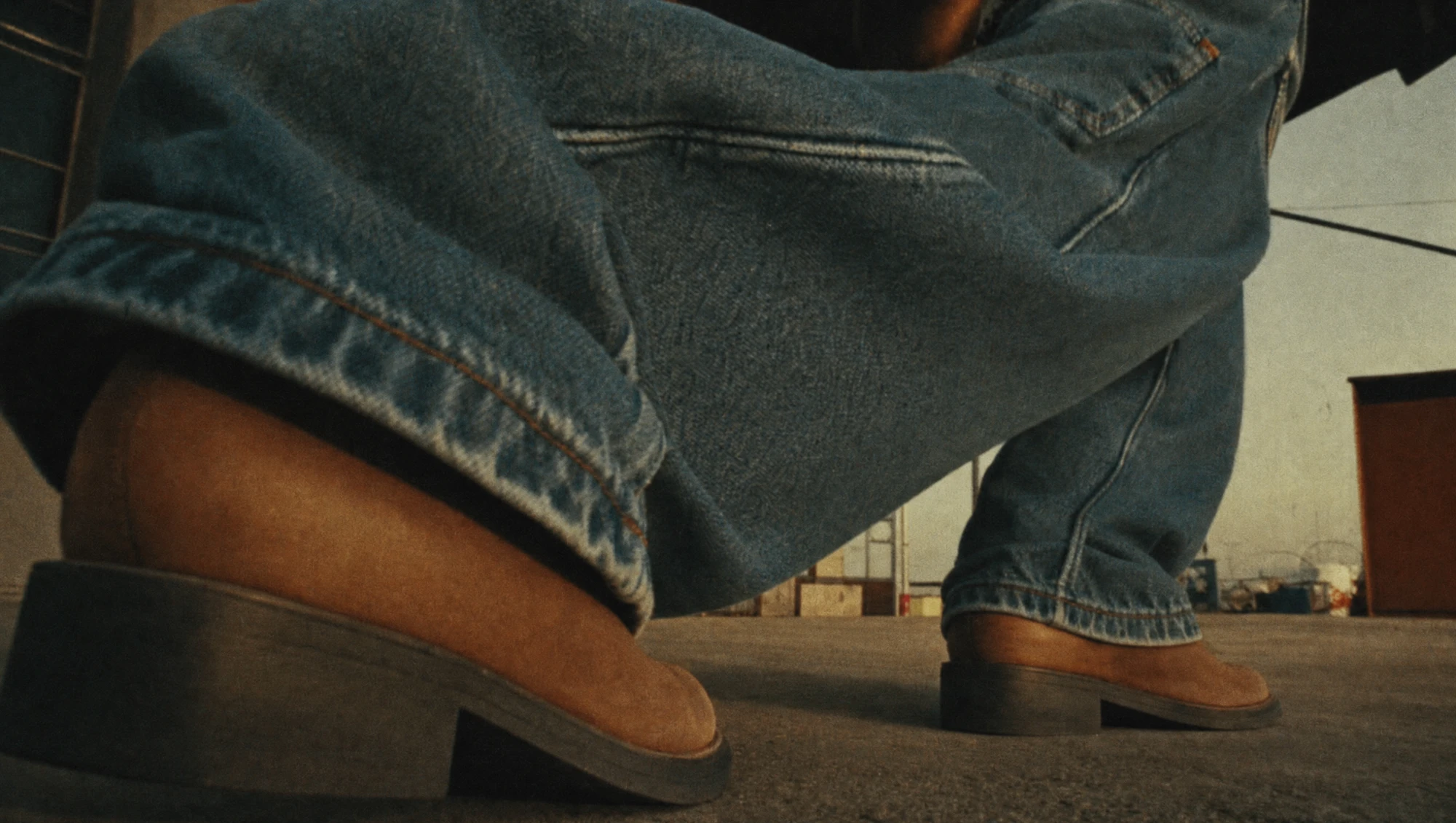
For the stair sequence, request a few isolated contact options rather than an entire finished scene. An illustrative prompt might be: “A single restrained shoe contact on a concrete step, close perspective, short natural decay, no music or voices.” This prompt has not been run for this article. Its value is the separation of source, action, perspective and exclusions.
Then choose the useful part of the result, position it against the action and listen in context. A sound that seems too small on its own may be appropriate within the film. A convincing isolated effect may still imply the wrong surface or scale when attached to the image.
5. Treat generated audio as material to review.
Audio supplied with a generated clip is a candidate, not an automatic final mix. Listen for unwanted voices, music, abrupt background changes and details that imply an action the picture does not show. If the sound is useful, keep it with a clear note about its source. If it fights the brief, replace or rebuild it.
Runway documents an Extract Audio node that creates a standalone audio file from video and an Add Audio node that replaces a video's original audio with a supplied track. Those are specific workflow capabilities. They do not, by themselves, isolate every individual instrument or effect inside a mixed track. Source: Runway utility-node documentation.
For our fictional film, a continuous atmosphere would be planned across the three spaces, then adjusted at the transitions. That is more controlled than accepting unrelated backgrounds from each picture clip. If a supplied mixed track cannot be revised cleanly, decide early whether to replace it rather than promise a selective change that the available source does not support.
WORKED EXAMPLE
Write a revision that can be acted on.
Instead of “make it more cinematic”, write: “At the rooftop reveal, reduce the foot detail and give the open-air atmosphere more space; retain the existing music phrase.” It names the moment, the layer and the intended change.
6. Decide what carries recognition.
Sound can identify a campaign through a recurring phrase, a musical shape or a particular texture. The choice should come from the brand idea. It does not follow that every short film needs a new audio logo, or that a generic impact becomes distinctive because it sits under the end card.
In an Australian agency example, Bastion describes combining Bruce Buffer's performance, an AI visual world and a custom remix of the “Call to Post” for TAB Time. This is Bastion's published production account; we have not independently tested its performance claims. The relevant observation is that the sonic reference was part of the concept alongside the imagery. Source: Bastion's TAB Time case study.
For the fictional outerwear example, our editorial recommendation is more restrained: develop the closing gesture from the musical phrase already heard, rather than introduce an unrelated sound at second twelve. If a real brand already has approved sonic assets, begin by asking what must carry through. Establish the permitted use and available source files with the asset owner before building the edit around them.
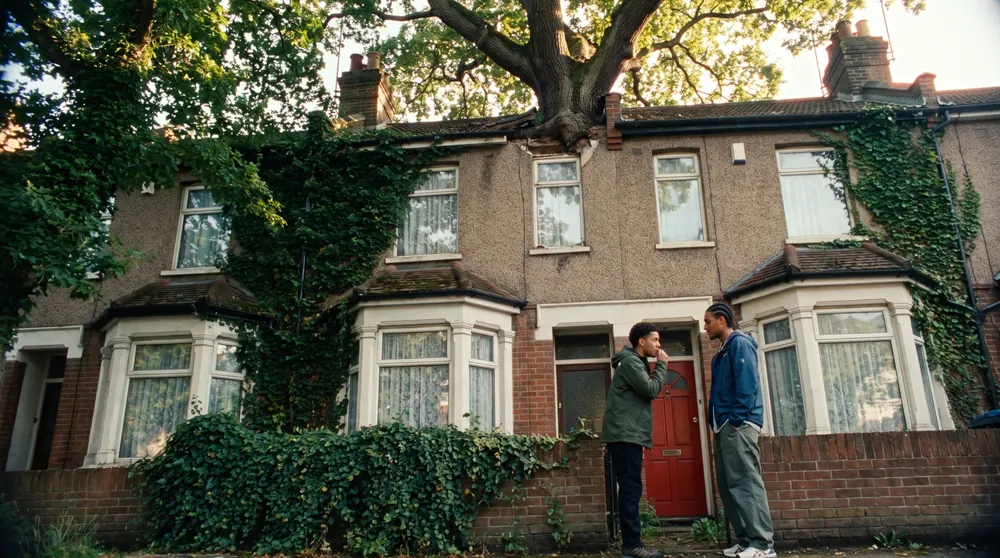
That distinction matters when reviewing AI production proposals. A tool can supply options; the creative team still needs to explain why one option belongs to this idea. Ask for that rationale in ordinary language.
7. Review the film, then review the deliverables.
First watch the whole film without stopping. Does it have a clear progression, and does the ending feel complete? Then review the important events individually. Check the relationship between action and sound, the continuity of each space and whether any layer competes with the message. Finally, play the actual exports on the devices relevant to the campaign, including a phone speaker and headphones.
There is no single delivery setting to assume for every destination. Obtain the required format, channel layout and loudness specification from the receiving platform or production partner, then check against that requirement. Also watch without sound: the written message and essential visual information should remain understandable for placements where viewers may choose to mute playback.
| Check | Evidence to request | Who decides? |
|---|---|---|
| Creative intent | Whole-film review against the agreed sound sentence | Creative lead and client |
| Action and continuity | Review of key contacts, thresholds and background changes | Editor and sound designer |
| Source and permitted use | Asset list with recordings, libraries, generated files and relevant permissions | Producer with the asset owner |
| Delivery | Checks against the receiving destination's supplied specification | Finishing team |
| Future changes | Agreed separate layers, version names and editable project handover | Producer and commissioning team |
Ask which separate audio layers are included rather than assuming that “stems” means the same thing to everyone. For this example, atmosphere, action effects and music would be useful separate exports, alongside the approved full mix. Specify a common start point and matching duration so the files can be aligned again.
A six-second cut would need a new sound progression, not simply the first six seconds of this plan. Our campaign adaptation guide covers the wider edit problem. To connect sound planning with picture production, read how to choose between AI, live action and 3D, or explore Nightwolf's creative capabilities.
Sources checked 5 October 2026. The cue sheet, prompts and recommendations are an illustrative editorial framework. No audio was generated or mixed for this article, and no results or client outcomes are claimed.
START WITH THE IDEA
A visual world.
A sound of its own.
Share the idea, the intended audience and the role sound needs to play.
Discuss your project ↗