
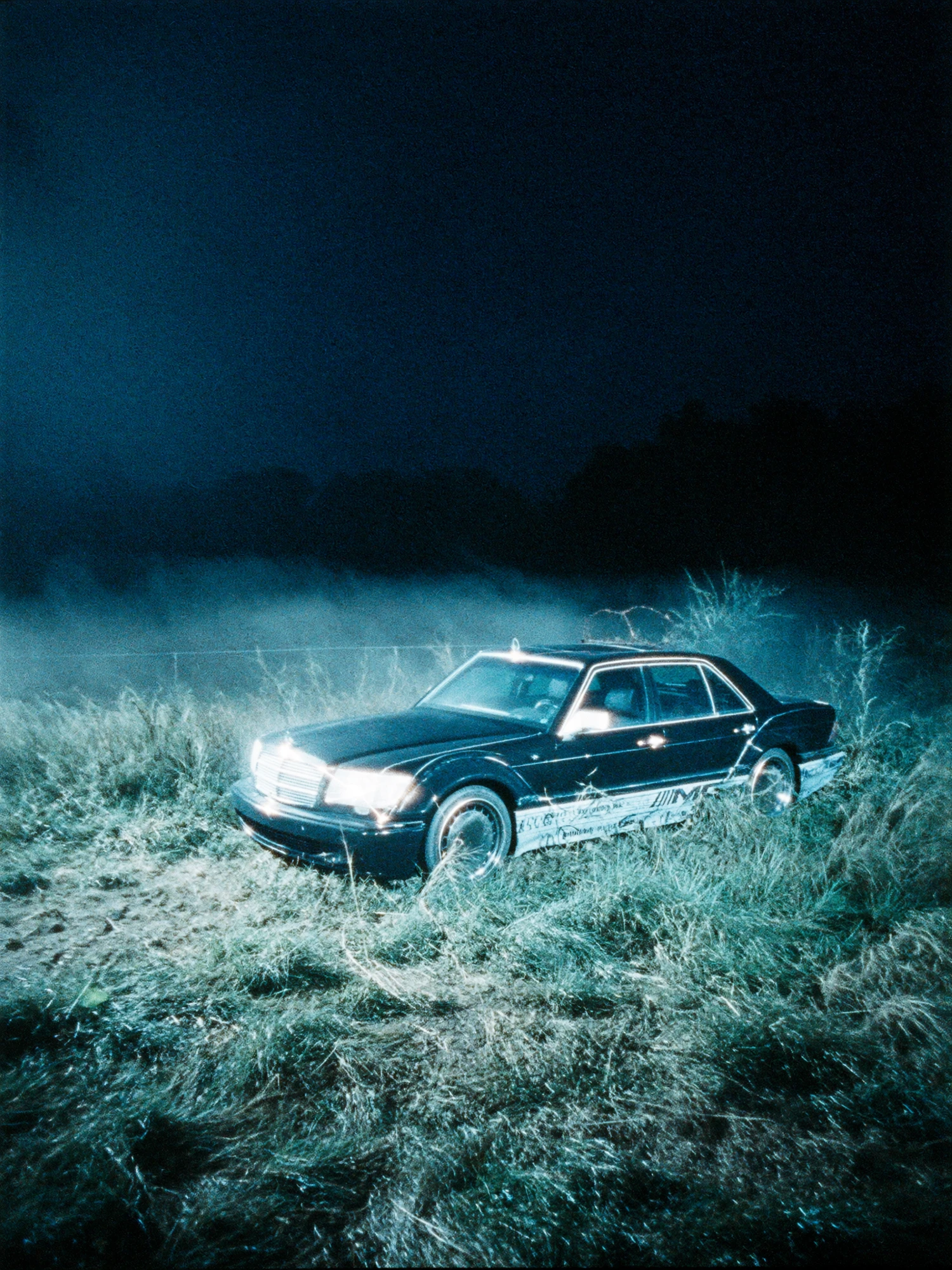
A reflection belongs to the whole shot, not just its best frame.
1. Name the reflection before designing the movement.
A polished product can look convincing in a still and become confusing as soon as it moves. The body may hold its shape while a reflected window changes size, a highlight jumps across a seam or a mirrored object disappears. For an AI product shot, the reflection needs its own place in the brief and the review.
Start with a precise description of what the audience should see. “Glossy and premium” leaves several different tasks unresolved. Is the camera seeing a broad light reflected in a curved surface, an identifiable room in a mirror, or a second image of the product in the tabletop? Each carries different information about the object and its surroundings.
Then separate reflected detail from detail seen through a transparent object. A bottle may show both. If the review simply asks whether the glass looks realistic, it becomes difficult to say which part needs changing. Name the visible layers: the bottle outline, the liquid or background seen through it, the reflected light and the label.
This article uses a deliberately small fictional shot to turn those distinctions into production decisions. It is a plan for evaluation, not a report of a completed generation. The aim is to define what would make a result usable before spending time choosing attractive variations.
| Visible feature | What to describe | What to review |
|---|---|---|
| Broad highlight | The intended light shape and the surface carrying it. | Does its changing shape remain coherent with the object? |
| Recognisable reflected scene | The window, room or other identifiable feature. | Does that feature retain its identity through the shot? |
| Product reflected in a base | The supporting surface and the visible reflected portion. | Does the reflection remain connected to the same product? |
| Detail seen through glass | The background or contents behind the surface. | Does it behave consistently with the intended material? |

2. Build a five-second shot around one clear intention.
FICTIONAL WORKED PLAN / NOT AN EXECUTED TEST
Imagine an invented homeware label called Aven Hollow presenting a polished metal desk object on a dark, lightly reflective base. The proposed five-second shot should communicate its rounded shape. The object stays still while the camera makes a small lateral move. A broad reflected light remains the main surface feature. No Aven Hollow commission, generated clip or measured result exists.
The creative intention is a gentle change of viewpoint that reveals form. It does not require the object to rotate, the room to transform or the lighting to sweep independently. Keeping those additions out of the first version makes it easier to identify why an attempted shot succeeds or fails.
Prepare a starting image in which the silhouette, base contact and reflected light already make sense for the intended design. If exact product geometry is required, use an approved product source or a controlled render as appropriate. A mood reference with invented geometry cannot establish product accuracy. See the guide to retaining real product photography when deciding what should remain fixed.
Write a small scene inventory alongside the image. For this example: one metal object, one base, a simple dark background, one dominant broad light shape and a fixed product position. This inventory is an approval reference, not a claim that a prompt creates a physically reconstructed scene.
| Moment | Creative requirement | Review target |
|---|---|---|
| Opening | Establish the object and its contact with the base. | Recognisable silhouette; no ambiguous second object. |
| Early move | Begin a restrained lateral camera movement. | Object remains stationary; viewpoint changes coherently. |
| Middle | Reveal the rounded form through a modest perspective change. | Highlight and surface detail do not detach or abruptly change identity. |
| Ending | Finish on a useful view for the edit. | Product and reflection remain intact through the final frame. |
These are review moments, not rigid instructions that guarantee a model will obey a timeline. The whole interval still needs watching. A reflection can be plausible at the beginning, middle and end while changing abruptly between those checkpoints.
3. Compare changes you can actually explain.
For the first candidate, ask only for the intended camera move and the stationary object. An illustrative motion prompt might be: “The camera makes a slow, small lateral move past the stationary object. One continuous shot.” The starting image carries the visual design. This wording is a proposed starting point, not a tested prompt or a promise of accurate reflections.
Runway’s Image to Video Prompting Guide, described as optimised for Gen-4.5, recommends using the image to establish the scene and the text to describe motion. It also recommends beginning with the important motion components and refining from there. Its guidance notes that reducing camera movement does not necessarily produce a perfectly still result. These are vendor recommendations, not independent evidence that a particular reflective shot will work. Source: Runway.
Keep the input image and available settings recorded while changing one deliberate aspect of the brief. If an initial camera move exposes too much of the unseen side, compare a smaller move. If the reflected feature is too complicated to judge, prepare a simpler starting composition and record that this changes the input. Do not describe the second result as a pure prompt comparison when its image also changed.
| Candidate | Deliberate difference | Question it answers |
|---|---|---|
| A | Small lateral camera move with the original input. | Can the intended reveal hold together? |
| B | Reduced camera travel; otherwise retain the recorded setup. | Does a more restrained reveal meet the creative need? |
| C | Simpler reflected environment in a revised input. | Is the scene complexity the wrong fit for the shot? |
Multiple generated outputs can differ even when the written request stays similar. Treat this comparison as production exploration, not a controlled scientific result. Record the model and version shown, settings actually available, input file, prompt, output file and the decision made. Do not invent a seed or camera parameter that the tool did not expose.
4. Review the reflected image as part of the product.
Watch each candidate once at normal speed before pausing. Note the first moment that distracts from the product. Then inspect that interval to identify the cause. This avoids spending the whole review on a tiny still-frame imperfection while missing an obvious movement problem.
Use a consistent set of questions. Does the product keep the same outline and construction? Does it remain in contact with the base? Does the reflected feature change smoothly enough to support the intended camera move? Does a seam or label remain identifiable when a bright area passes over it? If the image contains a recognisable reflected object, does that object remain the same thing?
Do not insist that every reflection moves in the same direction as the product. The result depends on the surface, viewpoint and scene. Instead, compare against an appropriate reference or a controlled scene where exact behaviour matters. An unexplained jump is a reason to investigate; an unfamiliar but continuous change is not automatically proof of an error.
WRITE AN ACTIONABLE REVIEW NOTE
Weak: “The metal feels AI.”
More useful: “During the middle of the move, the broad reflected light splits suddenly while the product outline stays unchanged. Compare that interval against the intended surface and lighting. Retain the approved silhouette; investigate the reflection before adding finishing effects.”
For the fictional Aven Hollow shot, a detached base reflection would be a different note from a changing product shape. The first asks whether the object and its reflected image can be made coherent. The second questions the product source or generation itself. Keep those decisions distinct when estimating a correction.
If typography or a logo appears in a reflection, check it in that spatial context rather than treating it as ordinary screen-space text. The brand artwork guide covers the approved master and exact-copy checks; this shot adds another view of that information. A corrected front-facing mark does not by itself correct every reflected appearance.
5. Choose the method around the evidence you need.
Generation is one possible way to explore this shot. It is not the only way to deliver it. If the object must remain exact and the reflection must describe a specific room or moving subject, discuss a production method that lets those relationships be controlled and inspected.
Compositing can be appropriate when the required elements and their movement can be supplied or constructed coherently. A simple flipped duplicate may suggest a stylised reflection in a particular flat layout, but do not assume it solves changing perspective, a curved surface or objects becoming visible from a new angle. Define the visual requirement before choosing the shortcut.
A 3D scene provides explicit objects, materials, lights and a camera to work with, but the chosen renderer and settings still matter. Blender’s 4.2 LTS EEVEE documentation, for example, describes screen tracing against the screen depth buffer with a fallback to light probes when a ray leaves the view. This is a version-specific rendering behaviour, not a statement about every 3D engine or an explanation of how generative video works. Ask how the selected workflow handles information outside the camera view. Source: Blender 4.2 LTS manual.
Specialist studio work offers a useful briefing perspective. FutureDeluxe’s account of “Rings Reimagined II” for Audi describes material research into movement, reflected light and interactions, alongside exploration of camera angles and lighting. Its published credits identify CG artists and a CG lead. That is the studio’s own account; it does not establish an AI workflow or a Nightwolf connection. The practical lesson is to allocate material development its own review rather than treating surface quality as a final filter. Source: FutureDeluxe.
For Aven Hollow, the decision could be to keep a successful restrained generation, simplify the environment, build the shot in 3D, or retain a photographed object with an agreed composite. No option is declared the winner here because the candidates have not been produced. Choose on product fidelity, continuity, creative usefulness and feasible finishing work.
6. Finish with a clear acceptance decision.
A reflection review should end with a decision that another person can act on. “Almost there” is not enough to distinguish a small finishing correction from a shot that needs rebuilding. Identify the accepted version, the unresolved interval and the change required.
| Finding | Decision to consider | Evidence to retain |
|---|---|---|
| Product and reflection remain coherent. | Proceed to agreed finishing and export review. | Selected file, review notes and approval. |
| One local defect with stable surrounding material. | Assess a bounded correction. | Exact interval and reference for the repair. |
| Repeated changes in product or reflected identity. | Revise the shot or production method. | Examples showing why finishing alone is insufficient. |
| The reflection competes with the intended message. | Revisit the art direction. | Creative requirement and proposed simplification. |
After finishing, inspect the actual export. Review the first and last frames, the full movement and the crop used in the final placement. Do not hide an unresolved identity change behind blur, grain or a shorter edit without acknowledging that the delivery has changed. If the usable portion becomes shorter, check whether it still serves the sequence.
Keep the input and output versions, the documented settings, the source references and the approval note with the handover. Where a comparison is presented later, preserve enough evidence to show what actually changed. A pair of unrelated polished images is not a reflection test.
The most useful result of this planning exercise is a specific question: can this product, on this surface, with this movement, sustain the intended reflection? Answer it with the actual material. The shot-test planning guide provides the wider evaluation structure, while the depth and occlusion guide covers objects passing in front of one another.
Sources checked 26 October 2026. Aven Hollow and its five-second shot are fictional; no generation, experiment or client result is claimed. Explore imagery provides independent visual references. Runway guidance and FutureDeluxe’s project account are attributed to their publishers. The Blender note is explicitly limited to its 4.2 LTS documentation.
DELIVER WITH INTENTION
A considered surface.
A coherent shot.
Bring the product, the movement and the details the audience needs to believe.
Discuss your project ↗