
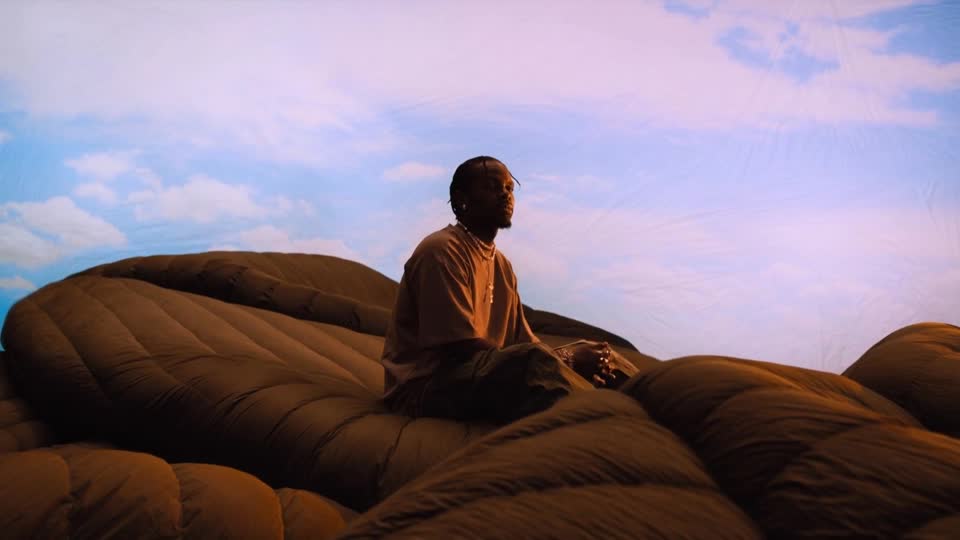
A reference pack works when each image answers a clear question. Explain what to preserve, what to borrow and what remains open.
1. Send references with a defined purpose.
Send the images that explain the decisions your production team needs to make. Include accurate subject or product references, a small selection of visual-direction examples and the intended layout or framing. Label what each file should influence. A large folder of attractive images is less useful when nobody knows which details matter.
There is no universal ideal number of references. A simple still may need only a few clear inputs; a campaign with several products, locations and deliverables may need a larger organised pack. The test is whether each reference answers a distinct question. Remove duplicates that add no information and identify missing views that would otherwise force the team to guess.
Start the pack with a short statement of intent: what is being made, who it is for and what must be recognisable. Then explain what is already approved and what remains open to exploration. This article focuses on that reference handover; our production briefing guide covers the wider objective, schedule and deliverables.
A reference is an instruction to discuss, not an automatic guarantee of output. The team still needs to choose a workflow, inspect the results and resolve the places where an image can be read in more than one way.
2. Separate subject truth from visual mood.
A product photograph can establish the actual shape of a bottle. A campaign image can suggest an atmosphere. These files serve different roles even when both contain a bottle. Mark the first as an accuracy reference and the second as a mood reference, then say which features of the mood image should carry through.
For a real product, include clear views of important surfaces and supplied artwork where relevant. Identify the current version, colour and finish. If the back or underside is needed but absent, flag the gap instead of allowing a generated interpretation to become the product specification. For a person, use appropriate, authorised references and clarify which identity and styling details must remain consistent.
For visual mood, write a selective note: “Use the restrained palette and quiet background; do not copy the person, clothing or location.” That is more useful than “make it like this”. It gives the team room to develop an original image while keeping the desired visual relationship clear.
Keep original assets alongside the briefing document. A small thumbnail in a presentation may communicate intent but lose the detail required for production. The studio should know which file is the actual source and which is only an annotated preview.
3. Give each reference one primary role.
Use a short label that connects the filename to its job. The following is an illustrative pack for an imaginary travel-bag campaign. No real product, commission or generation is represented. The file names are examples of a handover convention, not existing assets.
| Example file | Primary role | Accompanying note |
|---|---|---|
| 01-bag-front-approved.jpg | Product accuracy | Preserve handle shape, seam positions and front pocket |
| 02-bag-side-approved.jpg | Depth and construction | Use this view for thickness and strap attachments |
| 03-palette-reference.jpg | Colour direction | Use the muted environment; the bag colour comes from approved product assets |
| 04-layout-sketch.png | Composition | Bag on the left, clear headline area on the right |
| 05-motion-reference.mp4 | Movement | Discuss the slow reveal from 00:02 to 00:04, not the entire clip |
A single image may contain several useful qualities, but name the primary one and any secondary influence explicitly. If a lighting reference also has a compelling camera angle, decide whether that angle is intended. Otherwise the team may reproduce a feature that nobody actually requested.
Runway's reference-media guide describes assigning labels to uploaded assets and referring to them in a prompt. It also states that available media types depend on the model. This supports a practical distinction: the production brief should define each asset's role before the team translates those roles into the selected tool's inputs. Source: Runway reference-media guidance.
4. Resolve conflicting direction before generation.
Suppose the travel-bag pack contains a clean white product image, a dark station scene and a brightly coloured editorial photograph. Those references can coexist if their jobs are clear. They become contradictory if all three are presented as the complete intended look.
Write a priority order. In our fictional example, the approved bag views govern construction and colour; the station reference informs the environment; the layout sketch governs the placement of the bag and headline. The editorial image is inspiration for energy only. If that is too ambiguous, remove it until the main direction is settled.
Ask one reviewer to consolidate comments before the pack is sent. “More contrast” from one stakeholder and “softer, flatter light” from another may represent two different creative routes. Record them as alternatives, or agree which direction leads. Leaving both as simultaneous requirements creates avoidable uncertainty.
A useful conflict note names the decision rather than the person who disagrees: “Environment remains dark, but the front pocket must stay readable.” That describes a problem the creative team can solve. For a deeper example of turning mood into visible constraints, see our worked lighting brief.
5. Use moving references for moving questions.
A still frame can suggest framing or a pose. It cannot demonstrate how quickly a camera moves, how an action develops or when a cut feels right. If the brief depends on movement, provide a relevant clip with a time range and a sentence describing what to observe.
For the imaginary bag film, a note might say: “Observe only the gentle sideways reveal between two and four seconds. Keep our bag stationary; do not reproduce the reference's hand action.” The time range identifies the evidence and the note separates the desired movement from incidental content.
Distinguish camera movement, subject movement and editing. A fast sequence of static shots is not the same instruction as a fast-moving camera. If the reference combines all three, annotate them separately and say which part matters. Our guide to planning AI camera movement develops that production decision.
If only a still is available, describe the proposed motion as an intention rather than claiming it is demonstrated by the reference. A rough storyboard or written sequence can make the missing information explicit without pretending that the movement has already been tested.
6. Keep the pack current and traceable.
Use one clearly named current pack, with dated versions and a short change note. Keep superseded references separate so the artist does not accidentally work from an old product design or rejected colour route. When replacing a file, say which prior file it replaces and whether the change affects work already approved.
NewBridge Creative in Nova Scotia describes an intake combining the objective, brand system, references, product assets and deliverables. Its portfolio also labels speculative work as such. Those are useful examples of distinguishing source material and project context; they are the studio's own descriptions, not independent evidence of production outcomes. Source: NewBridge Creative's briefing process and selected work.
Our recommendation is to include a short reference register. Record the filename, purpose, source, version and any limits on use. Make clear whether an asset is supplied for direct production use or only for discussing a visual quality. Do not assume that finding an image online makes it an approved production input.
- Accuracy: current subject or product views are clearly identified.
- Direction: each mood image has a specific written purpose.
- Layout: required crop, subject placement and copy space are visible.
- Motion: relevant time ranges and movement types are named.
- Priority: conflicts and optional alternatives are resolved or explicitly flagged.
- Version: one current pack and one consolidated set of comments are available.
Before sending, ask a colleague to explain the intended image using only the pack. If they cannot tell which features must remain exact and which are open to interpretation, improve the labels. The aim is a shared direction that can be acted on, not an impressive volume of inspiration.
Nightwolf's creative production capabilities connect that direction with the final imagery and film. Bring the strongest evidence for what matters, identify the gaps, and leave space for the creative team to propose how the idea should develop.
Sources checked 9 October 2026. The travel-bag pack and filenames are fictional examples. Explore imagery is used as independent visual discussion material, not a single campaign, a before-and-after sequence or evidence of a generation test. No new media was generated.
GIVE THE IDEA DIRECTION
Clear references.
Shared direction.
Bring your idea and the references that explain it.
Discuss your project ↗